


Zigbee vs Matter vs Wi-Fi: The Complete 2026 Guide for Australian Smart Home Buyers
Every second smart home question in our inbox starts the same way: "I bought a smart plug and now Alexa/Google Home says it needs a hub." The person didn't do anything wrong — they just bought a Zigbee device without knowing Zigbee devices need a hub, while the Wi-Fi version sitting right next to it on the shelf didn't. Getting this one decision wrong is the single biggest cause of smart home frustration in Australian homes, so this guide exists to make sure you never buy the wrong protocol again.
The short version
- Zigbee is a low-power radio protocol. Devices form their own mesh network and talk to each other directly, but you need a hub to bridge that mesh to your phone and voice assistants.
- Matter is not a radio — it's a shared software language. It rides on top of Wi-Fi, Ethernet, or Thread, and its entire purpose is letting a device bought for Google Home also work with Apple Home and Alexa without three separate setups.
- Wi-Fi devices connect straight to your home router. No hub needed, but every device is a full participant on your network, and enough of them will slow it down.
What you will need to make this decision
- A rough device count — how many smart devices you plan to run in the next 12 months (this matters more than anything else)
- Your router's capabilities — most Australian NBN routers handle 2.4GHz Wi-Fi fine for 10–15 devices, but struggle beyond that
- Knowledge of your primary ecosystem — Google Home, Apple Home, or Amazon Alexa
- A willingness to buy one hub if you're going the Zigbee route (see our Zigbee hubs and gateways). For Matter-over-Thread you'll need a Thread border router, which is often a device you already own — an Apple TV 4K, HomePod, or Echo (4th gen or newer)
Step 1: Understand what problem each protocol actually solves
Zigbee was built for battery-powered sensors and small devices that need to last years on a coin cell. A Zigbee door sensor sips so little power it can run for two years on one battery, because it only wakes up to transmit a tiny packet when the door opens. The tradeoff is that Zigbee devices can't talk to your phone directly — they need a hub to translate their signal onto your Wi-Fi network. The upside: every Zigbee device you add extends the mesh, so the more devices you have, the more reliable the whole system becomes.
Matter solves a completely different problem: brand lock-in. Matter is an application-layer standard backed by Apple, Google, Amazon, and Samsung — a Matter-certified device can be controlled from Google Home, Apple Home, and Alexa at the same time, using the same underlying setup. Matter itself isn't a wireless signal; it typically runs over your existing Wi-Fi network or, for battery devices, over Thread (a low-power mesh protocol similar in spirit to Zigbee, but built for Matter from the ground up).
Wi-Fi devices are the simplest to set up because they skip the hub step entirely — the device joins your router directly, the same way your laptop does. This is why cheap smart plugs and globes are almost always Wi-Fi: no hub to sell, no protocol licensing, just a chip and an app. The cost is network load. Every Wi-Fi smart device is a permanent, chatty citizen on your 2.4GHz band, and Australian routers supplied by NBN retailers are frequently under-powered for more than a handful of them.
Step 2: Know the 2026 Australian rules before you buy
This changed recently and most buying guides haven't caught up. The Cyber Security (Security Standards for Smart Devices) Rules 2025 came into effect on 4 March 2026, introducing mandatory minimum cyber security requirements for consumer smart devices manufactured for sale in Australia from that date. The headline change for buyers: devices can no longer ship with a universal default password (like "admin/admin") — they must force you to set a unique password or credential on first setup, and the manufacturer must publish a way to report security issues. Note that the rules apply to devices manufactured on or after 4 March 2026, so older stock legitimately predates them.
Separately, mains-powered electrical devices sold in Australia are subject to Australian electrical safety requirements, and any device containing a radio transmitter — which includes every Wi-Fi, Zigbee, Thread and Bluetooth product — falls under ACMA's electromagnetic compatibility and radiocommunications arrangements, signified by the RCM (Regulatory Compliance Mark). These are separate regimes to the cyber rules above. If compliance documentation matters to you for a specific product, ask the retailer directly — a reputable seller will tell you exactly what they hold.
Step 3: Match the protocol to your actual situation
There's no universally "best" protocol — only the right one for your circumstances:
- Renting or moving often: Wi-Fi devices are portable and need no hub investment. Good for a handful of plugs and globes you'll take with you.
- Retrofitting an established home with 10+ devices planned: Zigbee, via a single hub, keeps your Wi-Fi network light and gives you the best price-per-device on sensors and switches.
- New build or planning long-term: Matter-certified devices (ideally over Thread) future-proof your investment and avoid ecosystem lock-in if you switch from Android to iPhone, or add a housemate on a different platform.
- Large mesh networks (20+ sensors, whole-home lighting): Zigbee's mesh scales exceptionally well and remains the cheapest per-device option in 2026, even as Matter adoption grows.
- Simple, single-device jobs (one smart kettle plug, one garage sensor): Wi-Fi is fine — buying a hub for one device rarely makes sense.
A sensible default for most Australian households in 2026: buy Matter-certified devices when you care about cross-platform flexibility, keep Zigbee for proven lighting and sensor networks where cost and battery life matter, and use Wi-Fi selectively for one-off, simple installs.
Frequently Asked Questions
Is Matter a replacement for Zigbee?
No. Zigbee is a wireless radio protocol; Matter is a software standard that can run over Wi-Fi, Ethernet, or Thread. They increasingly work alongside each other rather than competing.
Do I need a hub for Matter devices?
Wi-Fi based Matter devices don't need a hub. Thread-based Matter devices need a Thread border router, often already built into an Apple TV 4K, HomePod, or Echo (4th gen or newer) you may already own.
Do I need a hub for Zigbee devices?
Yes. Zigbee devices can't reach your phone or voice assistant on their own — they need a Zigbee hub to bridge them onto your home network. One hub covers dozens of devices, so it's a single purchase, not one per device.
How many Wi-Fi devices can an NBN router handle?
Typically 10-15 on the 2.4GHz band before performance drops. Beyond that, move new devices to Zigbee/Matter-over-Thread or add a dedicated IoT Wi-Fi network.
What is the RCM mark?
It indicates a supplier has declared the device meets applicable Australian electrical safety and radiocommunications requirements. It's a supplier self-declaration, not a certificate issued by a testing body.
Go deeper
Now that you know which protocol fits your situation, put it into practice: fix a Wi-Fi device that keeps dropping offline, or read our guide to setting up Google Home and Alexa in an Australian home.
Browse PureNode's range of smart sensors, Zigbee hubs and gateways, and smart lighting. Every product page tells you upfront whether that device needs a hub, a Thread border router, or nothing at all.
Products in this guide
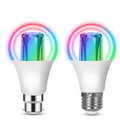
The devices mentioned above, in stock and shipped free Australia-wide.
Not sure where to start?
Browse our under-A$100 picks — the essentials most people start their smart home with.