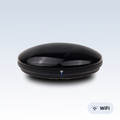
Do not start with a hub
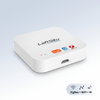
The most common first purchase is the one most people regret. A hub does nothing on its own — it is infrastructure, not a product. Buy one first and you have spent money on a small white box that sits there doing nothing until you buy something else.
Start with a device that solves an actual annoyance. Add the hub when you have decided you like this and want more.
Pick the annoyance, not the technology
The people who end up with a smart home they actually use nearly all started the same way: one specific irritation, one device that fixed it.
So rather than asking what to buy, work out which of these sounds most like you.
"I always wonder if I left something on"
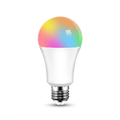
Start with a smart light globe. Screws into your existing fitting, no wiring, works on Wi-Fi with no hub. From about A$9.
Check the fitting first — Australian homes use both E27 screw and B22 bayonet, and they are not interchangeable. Look at the base of your current globe before ordering.
The moment it clicks is usually the first time you turn the lounge light off from bed. Browse Smart Lighting.
"I worry about the house while we are away"
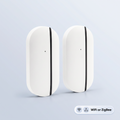
Start with a door or window sensor. Two small magnets, adhesive mounted, and your phone tells you the instant something opens. From around A$15, and one of the few purchases that genuinely changes how you feel about leaving the house.
See Smart Security.
"Our aircon runs when nobody is home"
Start with a smart IR controller. It replaces the remote for your split system — no electrician, no new aircon, no warranty implications. Around A$35, and it works with almost every split system sold in Australia.
Schedule it so cooling starts before you get home instead of running all afternoon. See Smart Climate Control.
"I would rather not come home to a flood"
Start with a water leak sensor. Around A$10, sits on the floor under the dishwasher or washing machine, and calls your phone the moment it gets wet.
The least exciting device on this page and the highest value per dollar in the shop.
"Opening the curtains every morning is a chore"
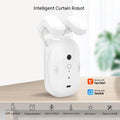
Start with a curtain motor. Retrofits to the rod or track you already have, so no new curtains and no rewiring. It is the most visibly impressive first device — the one guests notice — though also the priciest at around A$99.
See Smart Curtains & Blinds.
Your first hour, realistically
Setting up a first device takes about twenty minutes, and most of that is the app rather than the hardware.
- Install Smart Life, register, set your region to Australia.
- Make sure your phone is on 2.4GHz Wi-Fi, not 5GHz. This is the single most common cause of failed setup.
- Power the device on and wait for a fast blink — that means pairing mode.
- Add it in the app, name it something you would say out loud, assign it a room.
- Link Smart Life to Alexa or Google Home once, and every future device appears automatically.
Our Tuya SmartLife walkthrough covers each step properly, including what to do when pairing fails.
What to add second
Once one device is working, the useful next step is usually a second of the same kind rather than something new. Two globes make a room; one makes a novelty. Three leak sensors cover a house; one covers a dishwasher.
The hub becomes worth buying when you are heading past roughly five devices, or when battery life starts to annoy you. At that point ZigBee is the better path, and everything after it gets cheaper and lasts longer.
What not to buy first
Skip anything needing an electrician until you are sure you like this. Hardwired switches and powerpoints are excellent — but they are a commitment, and licensed installation in Australia costs more than most first devices.
Skip anything advertised as a whole-home kit. They bundle devices you did not choose to solve problems you may not have.
And skip anything where the listing cannot tell you plainly whether it needs a hub. If that is unclear before you buy, it will not get clearer afterwards.
Frequently asked questions
How much should a first smart home device cost?
Between A$10 and A$40 for almost everything worth starting with. If a first device costs more than that, it is probably solving a problem you have not confirmed you have.
Do I need a hub to start?
No. Every device recommended above runs on Wi-Fi and connects straight to your router. Hubs matter later, once you are running enough devices for battery life and Wi-Fi load to bite.
Will this work in a rental?
Yes. Globes, sensors, IR controllers and curtain motors all install without tools or wiring and come away cleanly. Nothing recommended here needs landlord permission.
What if I already have Alexa or Google Home?
Then you are most of the way there. Link Smart Life to it once and everything you add afterwards is voice controllable straight away.
Can I mix brands later?
Largely, yes — anything on the Tuya platform lives in the same app regardless of who made it. It is one of the better reasons to start on Tuya rather than a closed ecosystem.