


How to Cut Your Electricity Bill with Smart Home Devices: An Australian Guide
Australia has some of the world's most expensive retail electricity — most households pay somewhere between 28 and 45 cents per kWh depending on state and retailer. That pricing makes energy management through smart home technology a genuinely financial decision rather than a novelty. Here is where the savings actually are, in order.
Where the electricity actually goes
Before buying anything, understand the shape of your bill. In a typical Australian home:
- Heating and cooling: the largest single category, often around 40% in homes with ducted air conditioning
- Water heating: roughly a fifth to a quarter of the bill on electric hot water
- Appliances and entertainment: a significant chunk, much of it avoidable
- Refrigeration: constant, and largely fixed
- Lighting: modest if you already run LED, substantial if you still have halogens
- Standby power: small per device, meaningful in aggregate
The order matters. Chasing standby power while your air conditioner runs in an empty house is optimising the wrong end of the bill.
Priority 1: Stop conditioning an empty house
Air conditioning is the biggest opportunity in most Australian homes, and the waste is nearly always the same — the unit running at full tilt in a house with nobody in it, or cooling from scratch at 6pm because it was switched off all day.
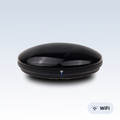
If your split system uses an infrared remote, a smart IR controller adds scheduling and app control to the unit you already own, with no installation. Set it to ease off during the day and return to comfort shortly before you get home. Recovering from a setback temperature is far cheaper than pulling a hot house down from scratch.
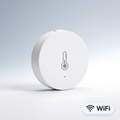
Add a temperature sensor and you can go further — cooling that starts when the room actually reaches 27°C, not because a timer said so.
Priority 2: Lighting that turns itself off
If you still have halogen downlights, the switch to LED is the single biggest lighting saving available — 4–8W versus 35–50W each, and less heat pumped into the room in summer, which your air conditioner then has to remove.
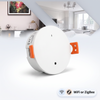
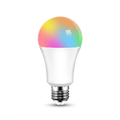
Beyond the globe swap, the saving comes from lights not running when nobody is there. Motion-triggered lighting in hallways, laundries, garages and bathrooms eliminates the light left on all afternoon. A motion or presence sensor paired with a smart globe handles this automatically, and a presence sensor keeps the light on while you are standing still — which basic motion sensors famously do not.
Priority 3: Know before you guess
Most people are wrong about which appliance is costing them money. Before spending on automation, it is worth measuring — a temperature and humidity sensor in each main room tells you which spaces are actually hard to heat or cool, and that usually points at draughts, insulation or window coverings rather than the air conditioner itself.
Automated curtains and blinds are underrated here. Closing blinds on the western side before the afternoon sun hits reduces heat load substantially, and doing it on a schedule means it happens whether you are home or not.
Priority 4: Cut the standby draw
Standby power is what devices draw while “off”. Individually small, collectively real — gaming consoles, AV receivers and desktop computers are the usual offenders, and older gaming consoles can draw surprisingly heavily in rest mode.
The fix is to cut power to non-essential devices when the house is empty, using an away routine. See our away mode guide for how to set that up.
One important caution: never put a fridge, freezer, or any medical device on a switch that automation can cut.
If you have solar
Smart scheduling matters even more with rooftop solar, because the goal shifts from using less to using it at the right time. Shifting high-draw activity into the middle of the day — running the air conditioner harder while the sun is up so the house coasts through the evening — increases self-consumption and reduces what you buy back from the grid at peak rates.
Doing the sums yourself
The arithmetic is simple enough to do on the back of an envelope. At roughly 32 cents per kWh, 1 kWh saved every day is about A$115 over a year.
So: a 50W standby load eliminated is around 1.2kWh a day. Ten halogen downlights replaced with LEDs saves roughly 0.44kW while they are running. Work out how many hours each actually runs in your home, and you will get a far more useful number than any generic estimate — including the ones in this article.
Frequently Asked Questions
Which device saves the most?
Almost always something controlling the air conditioner — heating and cooling is the biggest category on most Australian bills.
Setback temperature or off entirely?
For typical daily absences, setback wins. Recovering from 28°C is quicker and cheaper than cooling a house that's been shut up all day.
How much power do the devices themselves use?
Very little — a couple of watts for hubs and controllers, almost nothing for battery sensors.
Do they work with solar?
Yes, and the benefit is timing rather than reduction — shift high-draw activity into daylight hours to use your own generation instead of buying back at peak.
Are there rebates?
They change often and vary by state. Check Energy Made Easy and your state energy authority for what's current.
Start cutting your bill
Browse PureNode's smart climate control to schedule the biggest load in your home, sensors to trigger lights and aircon only when rooms are actually occupied, and automated blinds to keep the afternoon sun out before it becomes a cooling problem.
Products in this guide
The devices mentioned above, in stock and shipped free Australia-wide.
Not sure where to start?
Browse our under-A$100 picks — the essentials most people start their smart home with.