


Ducted vs Split System: What You Can Actually Automate in an Australian Home
Almost every guide to smart climate control is written for the American market, where a single 24VAC thermostat standard makes everything interchangeable. Australia does not work that way, and the result is a lot of people buying a device that was never going to work with their system.
This guide answers the question properly: what can you automate, what will it cost, and what do you need a professional for? The answer depends almost entirely on one thing — how your air conditioner is controlled today.
Start here: find your control type
Forget brands for a moment. Look at how you change the temperature:
- A handheld remote you point at the indoor unit — that is infrared. This is the good news case: a smart IR controller can automate it for well under A$50, with no installation at all.
- A panel screwed to the wall — that is a wired controller, typical of ducted systems. Automating it means replacing that controller, which is a professional job.
- A remote that works from anywhere in the room, even pointed away — that is RF, not infrared. An IR controller will not work.
The pointing test is the whole diagnosis. If it only responds when aimed at the unit, you are in the easy category.
If you have a split system: the easy path
Virtually all consumer split systems sold in Australia use an infrared remote. That means a smart IR controller can learn your existing remote's signals and reproduce them on command — from your phone, on a schedule, or by voice through Google Home or Alexa.
What this gets you:
- Pre-cool or pre-heat before you wake or arrive home
- Automatic setback when everyone leaves the house
- Voice control of a unit that never had it
- Temperature-triggered starts, if you pair it with a temperature sensor
No wiring, no electrician, no contact with the air conditioner itself — so no effect on its warranty. It plugs into a power point and sits on a shelf with line of sight to the indoor unit.
If you have ducted: the honest answer
Ducted reverse-cycle systems are usually controlled by a wired wall panel using a manufacturer's own communication protocol — not infrared. There is nothing for an IR controller to talk to, so it will not work, and we would rather tell you that than sell you one.
Your options are:
- Your manufacturer's own smart controller. Most major ducted brands sell a Wi-Fi controller that replaces the existing wall panel and connects to their app, usually with Google Home and Alexa support. This is generally the cleanest and most reliable route, and your installer or dealer can fit it as part of a service call.
- A third-party smart thermostat. Possible on some systems, but compatibility is genuinely limited in Australia because of the proprietary control protocols. Verify compatibility with your exact model before buying anything.
- Automate around it. If replacing the controller is not worth it, you can still get a lot from sensors — temperature and humidity monitoring per room, alerts when a room drifts out of range, and automations for everything else in the house.
PureNode does not sell ducted controllers. If that is your system, talk to the installer who fitted it.
Who is allowed to do the work
This trips people up, so to be clear:
- Smart IR controller — no installation at all. It is a USB-powered device on a shelf. Anyone can set it up.
- Replacing a ducted wall controller — often low voltage at the wall, but if the controller is mains-powered, or the job needs an interface board fitted inside the indoor unit or roof space, it requires a licensed electrician or refrigeration technician.
- Anything inside the indoor unit — always a licensed technician. This is not a DIY area, and doing it yourself can void your system warranty.
Schedules that actually save money
Whichever route you take, the saving comes from not conditioning an empty house. A sensible pattern:
- Weekday mornings: start 20–30 minutes before you get up, so the room is comfortable rather than being blasted from cold
- Daytime: economy setback rather than off — around 28°C in summer, 16°C in winter
- Evening: back to comfort temperature shortly before you arrive
- Night: off, or bedroom zone only if your system supports zoning
Setback beats switching off entirely. Recovering from 28°C is far quicker and cheaper than pulling a 38°C house down to 24°C from scratch.
Frequently Asked Questions
How do I know if my AC can be automated with an IR controller?
Point the remote away from the unit and press a button. Nothing happens? It's infrared — an IR controller will work. Still responds? It's RF, and it won't.
Can I automate ducted air conditioning this way?
Usually not — ducted systems use a wired wall panel, not infrared. The normal solution is your manufacturer's own Wi-Fi controller, fitted by your installer.
Do I need an electrician?
Not for an IR controller — it plugs into a power point. Replacing a ducted wall controller may need a licensed electrician or refrigeration technician.
Will it void my AC warranty?
An IR controller never touches the unit, so no. Work inside the indoor unit should always be done by a licensed technician.
What temperature when I'm out?
Setback rather than off — around 28–30°C cooling, 14–16°C heating. Recovering from setback is cheaper than starting from extremes.
Take control of your climate
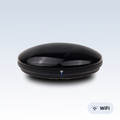
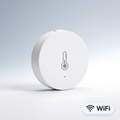
If you have a split system with an infrared remote, browse PureNode's smart climate control — aircon controllers and universal IR blasters that work with the remote you already own, plus temperature and humidity sensors to trigger them automatically. No installation, no electrician.
Products in this guide
The devices mentioned above, in stock and shipped free Australia-wide.
Not sure where to start?
Browse our under-A$100 picks — the essentials most people start their smart home with.